People often ask if karma is real—or if it’s just a philosophical idea used to explain coincidence. But when you remove spirituality from the equation and look strictly at mathematics, something interesting happens.
Karma stops sounding mystical.
And starts looking inevitable.
Because math doesn’t care about belief.
Math only cares about patterns, systems, and outcomes.
And those patterns tell a clear story: karma is real.
Karma Is a Mathematical System, Not a Moral One
At its core, karma is simply this:
Inputs create outputs.
That’s not spirituality.
That’s math.
Every mathematical system—from simple equations to complex networks—operates on the same rule:
- Variables interact
- Relationships compound
- Outcomes emerge over time
Karma is just cause and effect expressed across complex systems, where results aren’t always immediate or obvious.
Chaos Theory Explains Why Karma Isn’t Instant
One of the biggest misunderstandings about karma is timing.
People expect:
Bad action → immediate punishment
Good action → instant reward
But math shows us that nonlinear systems don’t work that way.
In chaos theory, tiny inputs can produce massive downstream effects—but only after enough iterations. This is known as sensitive dependence on initial conditions, often illustrated by the butterfly effect.
Your actions are those initial conditions.
Most consequences don’t show up right away because systems need time, repetition, and interaction to reveal outcomes.
That delay doesn’t disprove karma.
It mathematically explains it.
Feedback Loops: The Equation of Karma
In mathematics and systems modeling, feedback loops are unavoidable.
Positive feedback:
- Reinforces behavior
- Accelerates outcomes
- Compounds results
Negative feedback:
- Corrects imbalance
- Reduces instability
- Forces adaptation
Karma operates exactly like a feedback loop.
Consistent behavior feeds back into:
- Reputation
- Relationships
- Opportunities
- Decision-making paths
The system remembers—even if individuals don’t.
Probability Shows Why “Luck” Isn’t Random
Many people dismiss karma by saying:
“Bad people get lucky all the time.”
Mathematically, short-term randomness exists.
Long-term probability does not lie.
Over enough trials:
- Risky behavior increases failure probability
- Ethical behavior increases trust probability
- Exploitation increases collapse probability
This is why casinos always win eventually
And why patterns of behavior always converge toward outcomes.
Karma is probability accumulation, not divine judgment.
Fractals Prove Karma Repeats at Every Scale
Fractals are mathematical patterns that repeat no matter how closely you zoom in or out.
Human behavior works the same way:
- Small habits scale into life trajectories
- Micro-decisions echo into macro-outcomes
- Personal choices ripple into social systems
Karma isn’t a single event.
It’s a recursive pattern.
What you do once shapes what you do again.
What you repeat becomes who you are.
Who you are determines where you end up.
That’s fractal mathematics in action.
Network Theory Explains Social Karma
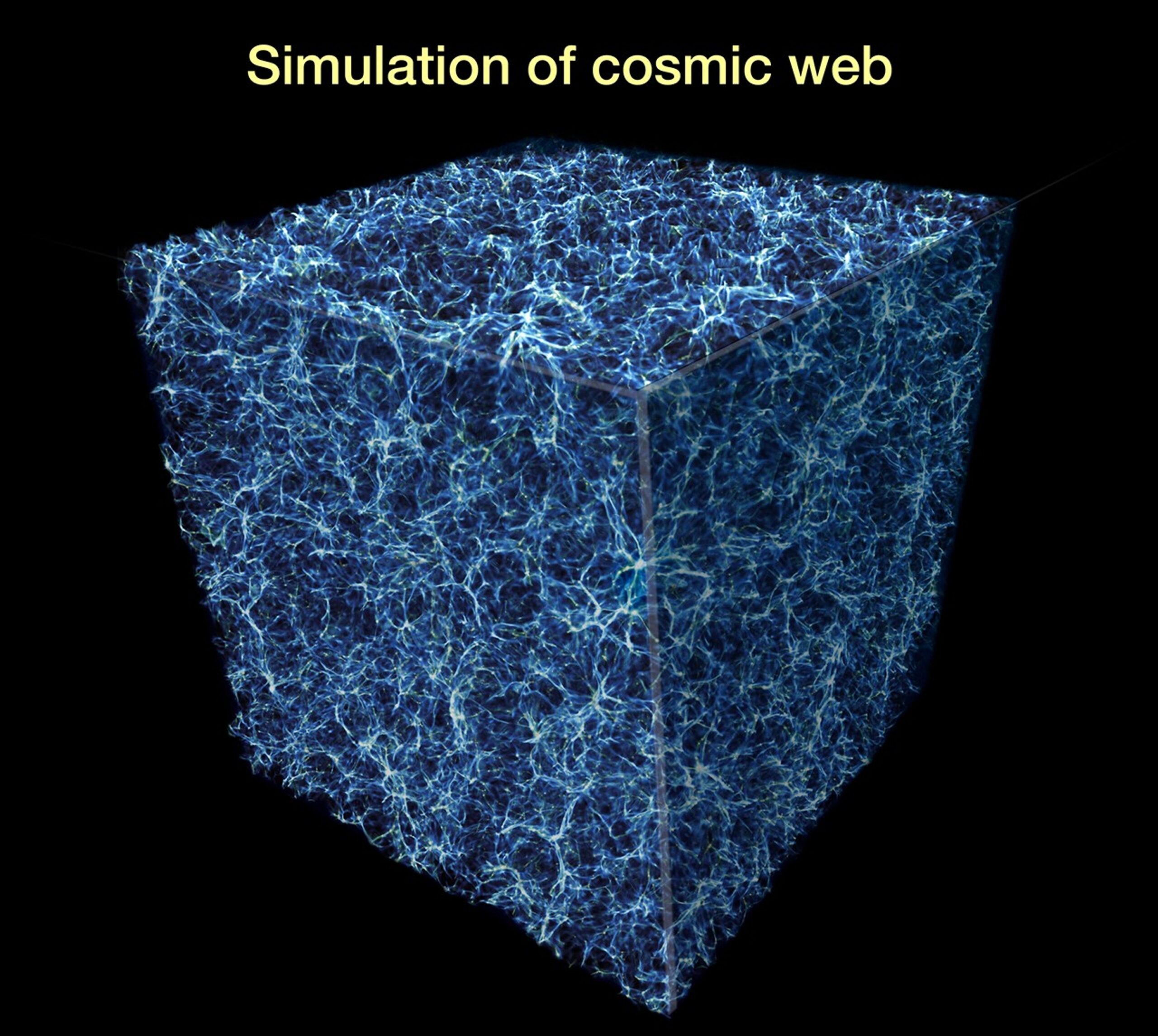
In network mathematics, every node affects the system.
Humans are nodes.
Your actions don’t exist in isolation:
- They propagate through relationships
- They alter trust networks
- They influence future connections
Mathematically, harmful nodes lose connections.
Helpful nodes gain influence.
Over time, networks self-correct.
That correction is karma—expressed socially, not spiritually.
Entropy Shows Why Unethical Behavior Collapses
Entropy measures disorder in a system.
Shortcuts, deception, and exploitation increase entropy.
Integrity, cooperation, and consistency reduce entropy.
High-entropy systems:
- Require more energy to maintain
- Become fragile
- Eventually collapse
Low-entropy systems:
- Are resilient
- Self-sustaining
- Scale efficiently
Karma isn’t punishment.
It’s system stability asserting itself.
The Math-Driven Truth About Karma
Karma doesn’t care about intention alone.
It tracks patterns.
Math doesn’t punish.
Math balances.
Every repeated action changes the variables.
Every variable affects the outcome.
Every system eventually resolves imbalance.
✨ Karma is not mystical
✨ Karma is not moral
✨ Karma is mathematical
So, Does Mathematics Prove Karma Is Real?
Yes.
Because numbers don’t forget.
Systems don’t ignore inputs.
Patterns don’t lie.
Karma isn’t a belief system—it’s how equations behave when humans are the variables.